
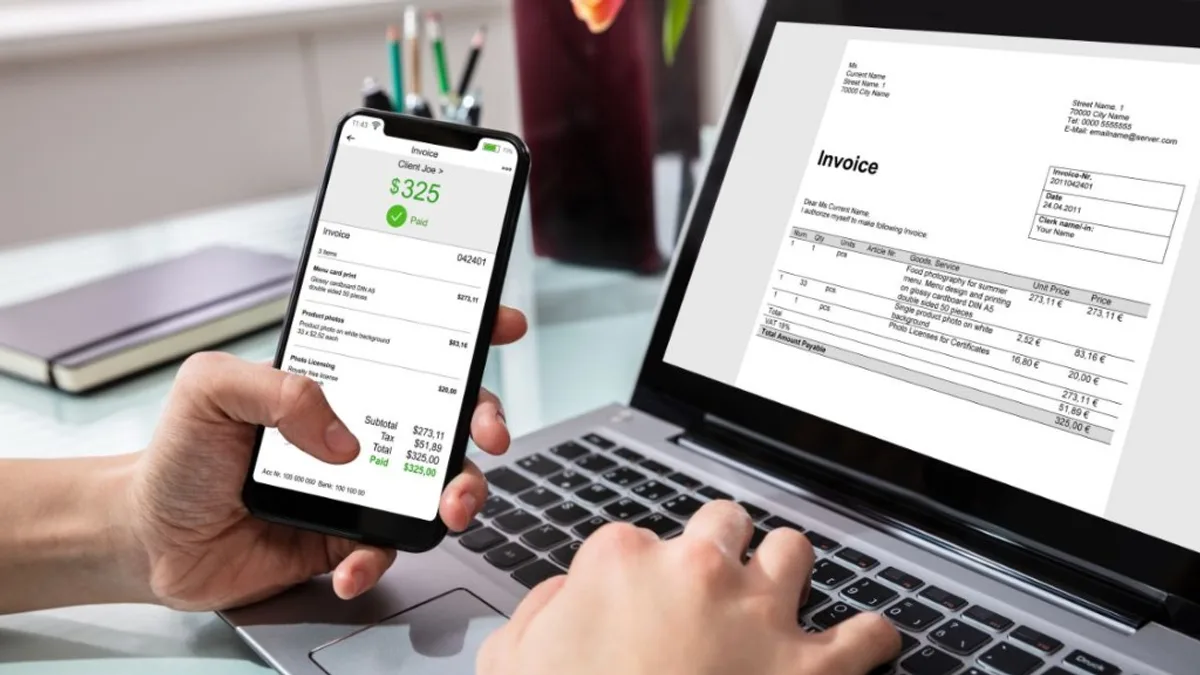
Refresh: invoice US clients in USD with due dates, Wise/PayPal notes, deposits on new retainers, and approval-tied line items Filipino VAs can defend.

 16 min read
Introduction
US clients are used to invoices that look like US vendor bills. They expect dollars, a due date, a billing contact, and payment instructions that their finance person can follow without a Zoom call.
Many Filipino VAs send something thinner. A chat total. A PHP amount. A "please pay when you can." Then the money sits. Or lands short after fees. Or gets disputed because the client never said yes to the hours.
This guide is for Filipino VAs who bill US clients direct. It is not the general invoice hygiene post. For field-by-field invoice basics that apply to any client, see freelance invoice best practices. Here the focus is tighter: USD, due dates US finance understands, Wise and PayPal payout notes, and an approval trail you can defend.
You will leave with:
- a US-ready invoice layout you can clone in the Invoice Generator
- Salag's ALIGN Protocol for US billing
- copyable email and line-item templates
- deposit rules for first US clients (deposit requirements)
- fee and $5/hr protection habits, including Wise to GCash fees
- a worked weekly retainer example
Why US client invoices fail for Filipino VAs
Most failures are boring, not dramatic.
Currency mismatch. You quote in USD in the proposal, then send a PHP invoice because GCash is on your mind. The client now has to convert. Their AP system may reject the PDF. You both argue about the rate on payday.
Missing due date. "Due upon receipt" without a calendar date floats. US teams often run Net 15 or Net 30 cycles. If you do not print a date, you wait for their cycle, not yours.
No payout instructions. "Pay me on Wise" with no invoice number, no fee rule, and no account hint creates support tickets on their side. Busy clients delay.
Billing unapproved work. You worked late. You assumed they wanted it. The invoice becomes a negotiation instead of a confirmation.
Fee surprise. They send $500. You keep less after PayPal or Wise. You feel underpaid. They thought they paid in full. Run the numbers with Wise to GCash fees for Filipino freelancers before you lock the rate.
No deposit on a brand-new direct client. You work week one on goodwill. They go quiet. You have hours and no leverage. For first retainers and projects, lock a deposit or week-one prepay in writing using deposit requirements every freelancer should use, then invoice that deposit in USD like any other line.
Fix the system once. Then reuse it every billing cycle.
What a US-ready VA invoice must include
Use this checklist on every US invoice. Build it once in the Invoice Generator, then clone it.
| Field | What to write | Why US clients care |
|---|---|---|
| Your legal name / DBA | Name that matches Wise or PayPal | Finance matches payee to vendor file |
| Client billing name | Company + AP contact if you have one | Right person routes payment |
| Invoice number | INV-2026-0626-01 style | Matching and reminders |
| Issue date | Calendar date | Starts their clock |
| Due date | Calendar date, not only Net language | Removes "when is this due?" |
| Currency | USD | Matches US budgets |
| Line items | Qty, rate, description, approval ref | Shows what was approved |
| Subtotal and total | USD only on the face of the invoice | No dual-currency math on the PDF |
| Payment method | Wise, PayPal, or ACH details | Reduces back-and-forth |
| Fee clause | Who pays transfer fees | Prevents short payments |
| Remittance note | "Include Invoice # in transfer reference" | Speeds matching |
Optional but useful for first invoices:
- short W-8BEN note if they asked for foreign contractor forms
- your Philippine address as written on your vendor forms
- purchase order (PO) number if their company uses one
- deposit / week-one prepay line when the client is new (see deposit requirements)
Build the reusable PDF once in the Invoice Generator so numbering, USD totals, and payout notes stay consistent.
Do not put your personal bank password hints, one-time codes, or private GCash PIN language on the PDF. Share payout rails that are meant for receiving money.
Salag ALIGN Protocol for US client invoicing
ALIGN Protocol is Salag's five-step habit for turning vague US billing into a written, protection-first loop.
A - Approve work in writing before you invoice
No written yes, no line item. Approvals can be email, Slack, Asana status, or a weekly hours log they replied "approved" to. After a call, send a three-line recap and wait for confirmation.
L - Lock USD terms, due dates, and payout rail
Before billable work, lock:
- rate in USD (Salag floor $5/hr with proof and tight scope for starters)
- billing rhythm (weekly, biweekly, or monthly)
- due date rule (Net 7 or Net 14 recommended for most VAs)
- deposit or week-one prepay for new direct clients (deposit guide)
- payout method (Wise preferred for many US-to-PH paths; PayPal only with fee plan)
- fee ownership
Put those locks in your Agreement Builder terms or a signed onboarding email. Spell payment timing in plain language with examples from payment terms for virtual assistants.
I - Invoice with line items tied to approvals
Every line should answer: what, how much, which approval. US AP staff skim for that. If a line cannot point to a yes, cut it or get the yes first. Create the numbered USD PDF in the Invoice Generator so you are not rebuilding fonts and footers every Friday.
G - Guard fees and take-home
Run a live fee estimate before you send large invoices. Decide if the client covers fees or if your USD total already buffers them. Protect Salag's $5/hr floor after fees, not only on the PDF. For fee math into GCash or bank, use Wise to GCash fees for Filipino freelancers.
N - Note the payment trail the same week money lands
When the transfer arrives, match it to the invoice number, amount, and fees. Save screenshots. Mark paid only when the numbers fit. Use how to match invoice payments from Wise and PayPal so unlabeled deposits do not close the wrong bill.
ALIGN turns payday from a hope into a checklist.
Step-by-step: how to invoice US clients as a Filipino VA
1) Set PHP needs, then quote USD
Open the rate calculator. Know the PHP you need for rent, tools, tax buffer, and savings. Convert that need into a USD rate that still clears $5/hr after realistic fees. Do not reverse the order. If a US client offers below a sustainable floor, skip or renegotiate with scope cuts, do not train yourself on underpaying posts.
2) Confirm vendor setup once (and the deposit rule)
In week one, send:
- your W-8BEN if they request it (follow current form instructions; this post is not tax advice)
- payout preference (Wise details or PayPal email)
- billing email for invoices
- preferred due date rule
- deposit or week-one prepay amount if they are a new direct client
US companies often store this in a vendor portal. Ask if they use Bill.com, Melio, Ramp, or internal AP. Match their process without abandoning your USD and due date rules.
If they are brand new and direct (not a long Upwork history), invoice the deposit first using the Invoice Generator before you open a full unpaid week of hours. Details and scripts: deposit requirements for freelancers.
3) Capture approvals all week
Create a simple folder or Notion page: Client > Period > Approvals. Drop screenshots or email links the day work is approved. Friday billing becomes assembly, not memory work.
4) Build USD line items from the approval folder
Group by deliverable or by day, whichever the client prefers. Hourly retainers usually want hours by week with task themes. Milestone projects want milestone name + approval date.
5) Add due date as a real calendar date
If you invoice on June 26 with Net 7, due date is July 3. Print both "Terms: Net 7" and "Due: July 3, 2026." US readers scan for the date first.
6) Paste payout notes and fee clause
Same block every time. Clients learn it. Finance forwards it without asking you again.
7) Send the invoice email the same day as approval or billing day
Attach PDF. Repeat total, due date, and payout method in the email body. Ask them to confirm receipt.
8) Reminder before the due date
One short reminder two business days before due is professional, not pushy. After due date, follow your late payment script with facts, not emotion.
9) Match the deposit, then mark paid
Compare sender, amount, currency, fees, and reference. If short, send a fee shortfall note. If unlabeled, ask which invoice it covers. Only then mark paid.
8) Remind once before due date, then escalate factually
One short reminder 1 to 2 days before the due date keeps good clients on track. If the date passes, send a past-due note with invoice number, amount, original due date, and the same payout block. Use a calm script from follow up on late payment without sounding desperate. Do not stack unpaid weeks while you "wait and see."
First US client: deposit, then recurring invoices
New direct US clients are where Filipino VAs lose the most unpaid hours. Treat the first money movement as a deposit or week-one prepay, not as a favor.
Recommended sequence
- Lock USD rate, scope, due date rule, payout rail, and deposit % in the Agreement Builder
- Send deposit invoice in USD the same day they agree (clone your template in the Invoice Generator)
- Start billable hours after the deposit clears, or after written confirmation that AP has scheduled it (your risk tolerance, written down)
- For week two onward, invoice on the ALIGN rhythm: approvals → USD PDF → due date → match
How much deposit?
Common VA patterns:
- 50% of the first two weeks for new retainers
- 30% to 50% of project value for one-off builds
- Full week-one prepay when the client is unknown and chat-only
Exact numbers belong in your agreement. Use deposit requirements every freelancer should use for the policy language, and payment terms examples for Net 7 / Net 14 wording clients understand.
Pilot week alternative
If the client wants a tiny test before a retainer, bill a paid pilot with a hard hour cap instead of free "trial work." See first paid pilot for virtual assistants.
Copyable invoice email and line-item templates
Paste these into your notes. Replace brackets. Each block is meant to copy as-is.
First invoice email to a US client
Subject: Invoice #[NUMBER] for [PROJECT / RETAINER PERIOD] - due [DUE DATE]
Hi [Name],
Thanks for approving the work for [period / milestone]. Invoice #[NUMBER] is attached.
Total due: $[AMOUNT] USD Issue date: [ISSUE DATE] Due date: [DUE DATE] (Net [7/14]) Currency: USD
Please pay by [Wise / PayPal] using the instructions on the invoice. Include Invoice #[NUMBER] in the transfer reference so we can match payment quickly.
Fee rule: [Client covers transfer fees so the credited amount equals $[AMOUNT] USD / Freelancer absorbs standard transfer fees; total already includes buffer].
If your AP team needs a W-8BEN, PO number, or a different billing contact on file, reply with what you need and I will send it the same day.
Thank you, [Your Name]
Deposit invoice email (new US client)
Subject: Deposit invoice #[NUMBER] - [PROJECT / RETAINER] - due [DUE DATE]
Hi [Name],
Per our agreement dated [AGREEMENT DATE], here is the deposit invoice to start work.
Total due: $[AMOUNT] USD Issue date: [ISSUE DATE] Due date: [DUE DATE] Currency: USD
What this covers: [50% of first two weeks / week-one prepay / project deposit] for [scope summary]. Billable hours for the ongoing retainer begin after this deposit clears (or as written in our agreement).
Please pay by [Wise / PayPal] using the instructions on the invoice. Include Invoice #[NUMBER] in the transfer reference.
Fee rule: [Client covers transfer fees so the credited amount equals $[AMOUNT] USD / Freelancer absorbs standard transfer fees; total already includes buffer].
Thank you, [Your Name]
Weekly retainer line-item block
Line 1: Virtual assistant retainer - week of [START DATE] to [END DATE] Description: Inbox triage, calendar support, and admin tasks per agreement dated [AGREEMENT DATE]. Approved by [Name] on [APPROVAL DATE] (email/Slack). Qty: [10] hours Rate: $[5.00]/hr USD Amount: $[50.00] USD
Line 2 (optional extra): Approved extra - [task name] Description: Out-of-retainer request approved [APPROVAL DATE]. Cap [2] hours. Qty: [2] hours Rate: $[5.00]/hr USD Amount: $[10.00] USD
Subtotal: $[60.00] USD Total due: $[60.00] USD
Milestone project line-item block
Line 1: Milestone [2] - [milestone name] Description: Deliverables: [list]. Client approval received [APPROVAL DATE] from [Name]. Reference thread: [short link or "email subject line"]. Qty: 1 Rate: $[AMOUNT] USD Amount: $[AMOUNT] USD
Total due: $[AMOUNT] USD Due date: [DUE DATE] Payment: Wise - please include Invoice #[NUMBER] in the reference note.
Wise payout notes block (put on invoice)
Payment method: Wise Payee name: [LEGAL NAME AS ON WISE] Wise email / US account details: [DETAILS YOU ARE COMFORTABLE SHARING] Invoice currency: USD Amount due: $[AMOUNT] USD Remittance reference (required): Invoice #[NUMBER] Fee rule: Client covers Wise fees so credited USD equals invoice total. If credited amount is short, balance remains due within 3 business days of notice.
PayPal payout notes block (put on invoice)
Payment method: PayPal PayPal email: [EMAIL] Invoice currency: USD Amount due: $[AMOUNT] USD Remittance reference (required): Invoice #[NUMBER] Fee rule: [Client sends Friends and Family only if both agree in writing - otherwise Goods and Services]. Client covers PayPal fees so net received equals $[AMOUNT] USD, OR Freelancer absorbs fees and invoice total already includes buffer. Note: Please do not send partial payments without naming which invoice lines they cover.
Pre-due reminder
Subject: Friendly reminder - Invoice #[NUMBER] due [DUE DATE]
Hi [Name],
Quick reminder that Invoice #[NUMBER] for $[AMOUNT] USD is due on [DUE DATE].
Payout: [Wise / PayPal] with reference Invoice #[NUMBER].
Reply if AP needs anything else from me. Happy to resend the PDF or W-8BEN.
Thank you, [Your Name]
Approval recap after a call (send before you bill)
Subject: Recap for approval - [period / task]
Hi [Name],
Sharing a short recap from today's call so I can invoice cleanly:
- Tasks approved: [list]
- Hours / fee: [X hours at $Y/hr] or [fixed $Z]
- Delivery date: [date]
- Out of scope unless change order: [list]
Reply "approved" if this matches. I will send Invoice #[NEXT NUMBER] after your yes.
Thank you, [Your Name]
Worked example: weekly US retainer at $5/hr
Maya is a Filipino VA supporting a US ecommerce founder. Agreement: 12 hours/week at $5/hr USD, Net 7, Wise, client covers Wise fees. Salag floor is met on the face of the invoice. Fees are guarded by the clause so take-home stays real.
Week of June 9 to June 13
- Hours logged: 12
- Client Slack: "Hours look good, approved" on June 13
- Extra: 1 hour product upload batch, approved same day at $5/hr
Invoice INV-2026-0613-01
- Issue date: June 13, 2026
- Due date: June 20, 2026
- Line 1: 12 hrs retainer @ $5/hr = $60
- Line 2: 1 hr approved extra @ $5/hr = $5
- Total: $65 USD
- Approval refs on each line
- Wise notes + client-covers-fees clause
Maya sends the first invoice email template the same day. On June 19 she sends the pre-due reminder. On June 20, $65 arrives on Wise with reference INV-2026-0613-01. She matches the deposit, screenshots the credit, marks paid.
If the client had sent $65 but eaten a $3 fee so only $62 credited, Maya would not mark paid. She would send a shortfall note with invoice number, amount due, amount received, and the fee clause. That is ALIGN's Guard and Note steps in action.
Comparison: weak US invoice vs ALIGN US invoice
| Moment | Weak invoice | ALIGN US invoice |
|---|---|---|
| Currency | PHP or mixed | USD only on invoice face |
| Due date | "ASAP" or blank | Net 7/14 + calendar date |
| Line items | "VA work June" | Hours/tasks + approval date |
| Payout | "PayPal please" | Full Wise/PayPal block + reference rule |
| Fees | Silent | Written ownership |
| Timing | Days after approval | Same day as approval or fixed billing day |
| New client | Free week "to build trust" | Deposit / week-one prepay invoice first |
| After payment | Mark paid by vibes | Match deposit, then close |
General clarity habits still matter. Reuse freelance invoice best practices for numbering and reminders. This table is the US-specific upgrade.
Common mistakes when invoicing US clients
1) Billing PHP to a US AP team
It feels local to you. It feels wrong to them. Keep USD on the invoice. Convert privately for your PHP budget.
2) Using Net 30 by default because "US companies do that"
Enterprise clients may need Net 30. Many startups and founders can do Net 7 or Net 14. Ask early. Your cash flow in the Philippines is part of the deal.
3) Sending invoices before approval
Speed is good. Unapproved speed creates disputes. ALIGN starts with Approve.
4) Letting PayPal fees silently break $5/hr
If you need $5/hr real, either raise the USD total or make them cover fees. Use the rate calculator before you agree to a fee-heavy rail.
5) Skipping the invoice number in payout notes
Unlabeled Wise deposits create matching hell when two clients pay similar amounts. Require the reference every time.
6) Mixing scope fights into the invoice email
If they added work without approval, pause and send a change note first. Do not hide a conflict inside a bloated invoice. Bill only what is approved, then negotiate the rest in writing.
7) Ignoring vendor forms until payday
W-8BEN and portal setup delays are common. Handle them in onboarding week so Invoice #1 is not stuck behind paperwork.
8) Skipping deposits because you are "just starting"
New does not mean free. A small paid pilot or deposit protects both sides. Policy language: deposit requirements.
9) Marking paid when the credit is short
Short is not paid. Document and collect the balance. See how to match invoice payments from Wise and PayPal. If the invoice is simply late, use late payment follow-up scripts before you keep working unpaid.
Payment trail pack for US clients
Keep one folder per client per month:
- Agreement or onboarding email with USD rate, due date rule, payout rail, and deposit rule
- Deposit invoice PDF + proof it cleared (first engagement)
- Weekly approval messages
- Recurring invoice PDFs from the Invoice Generator
- Invoice emails sent
- Wise or PayPal receipt
- Fee quote screenshot if relevant (Wise to GCash fees)
- Shortfall, reminder, or past-due emails, if any
That pack protects you in disputes, helps BIR income proof later, and makes handoffs easier if you ever hire help for admin.
When to re-apply ALIGN on US billing
Re-run ALIGN when:
- a new US client starts (deposit rule first)
- payout method changes (PayPal to Wise, or new ACH details)
- retainer hours change
- they ask for Net 30 after you agreed Net 7
- fees jump and your net slips near or under $5/hr
- a deposit arrives without a reference
- finance asks for new vendor documents
Do not wait for a missed payday to rebuild the system.
Definitions
USD invoice: A bill that states amounts only in US dollars on the document the client pays against.
Due date: The calendar day payment is expected. Print it even when you also write Net 7 or Net 14.
Payout rail: The path money travels (Wise, PayPal, ACH to virtual USD details).
Approval trail: Written proof the client accepted the work or hours before you billed.
Fee clause: A sentence that says who pays transfer fees and what happens if the credit is short.
ALIGN Protocol: Salag's five steps: Approve, Lock, Invoice, Guard, Note.
Deposit invoice: A USD invoice for prepaid start money (percent of retainer or project) before unpaid hours pile up.
W-8BEN: A US tax form many clients request to document foreign status. Not a substitute for Philippine tax compliance. Not personalized tax advice.
Net 7 / Net 14: Payment due 7 or 14 days after the invoice issue date.
Extra context: US invoices vs general invoice best practices
Salag already covers clean invoice fields and reminder habits in freelance invoice best practices. This post does not replace that guide.
Use this post when the client is US-based and the pain is cross-border:
- dollars vs pesos
- Wise and PayPal instructions
- AP due dates
- approval-tied line items for remote VA work
- fee protection so $5/hr stays real after conversion
Use the matching and fee posts when money is already moving:
Use these when the money has not started yet or is stuck:
- Deposit requirements every freelancer should use
- Payment terms for virtual assistants
- Follow up on late payment without sounding desperate
- First paid pilot for virtual assistants
Together they cover lock terms, send, receive, and reconcile.
Final thoughts
US clients pay faster when your invoice looks processable. USD totals. Real due dates. Payout notes they can forward to finance. Line items that point to approvals they already gave.
How to invoice US clients as a Filipino VA is less about fancy software and more about ALIGN: approve, lock, invoice, guard, note. Start with Salag's $5/hr floor, write fee ownership down, take a deposit on new direct clients, and send the invoice the same day work is approved.
Build the template once in the Invoice Generator. Reuse it every Friday. Protect the trail every time money lands.
How Salag helps
- Invoice Generator for numbered USD invoices, deposit invoices, and payout instructions
- Agreement Builder to lock rate, due dates, deposits, and payment rails before work starts
- Rate calculator so PHP needs map to USD quotes above $5/hr
- Deposit requirements for first-client prepay rules
- Payment terms examples for Net 7 / Net 14 language
- Late payment follow-up when due dates slip
- Freelance invoice best practices for universal invoice hygiene
- Match Wise and PayPal payments when payouts arrive
- Wise to GCash fees to protect take-home after conversion
In short
How to invoice US clients as a Filipino VA: bill in USD, set a clear due date (Net 7 or Net 14), add Wise or PayPal payout notes, collect a deposit on new retainers, and only invoice work the client already approved in writing. Use Salag's ALIGN Protocol so every line item ties to an approval, fee rule, and payment trail before you mark paid.
Common questions
How to invoice US clients as a Filipino VA: bill in USD, set a clear due date (Net 7 or Net 14), add Wise or PayPal payout notes, collect a deposit on new retainers, and only invoice work the client already approved in writing. Use Salag's ALIGN Protocol so every line item ties to an approval, fee rule, and payment trail before you mark paid.
Invoice in USD for almost every US client. US finance teams budget in dollars. PHP invoices force them to guess conversion and create payment fights. Convert to PHP only for your own budget and BIR records after money lands.
Many US clients prefer Wise (especially with US routing details), ACH to a virtual USD account, or PayPal if that is already their habit. Ask once during onboarding, write the chosen method on every invoice, and keep one primary rail per client to avoid fee chaos.
Often yes when a US client or platform asks for foreign status proof. Form W-8BEN tells them you are not a US person so they do not default to 30% withholding. This is not tax advice. Follow current IRS instructions and ask a tax pro if your setup is unusual.
Net 7 or Net 14 works for most VA retainers. Net 30 is common in big US companies but slow for Philippine cash flow. Put a calendar due date on the invoice, not only "Net 14," so both sides share one deadline.
Put Invoice #, USD total, due date, and Wise payout instructions on the PDF or email. Ask the client to include the invoice number in the transfer note. If you have Wise US account details, share those for ACH. Confirm fee ownership before the first payout.
Yes, if both of you accept the fees. PayPal is familiar to many US senders but often costs more after fees and conversion. If they insist, raise the invoice so your net still clears Salag's $5/hr floor, or ask them to cover fees in writing.
Every line item should point to a written yes: email date, Slack message, milestone approval, or weekly hours log the client already confirmed. Example: "Inbox triage, week of Jun 9, 10 hrs @ $5/hr, approved Jun 13." No approval, no billable line.
Your legal name, client billing name, invoice number, issue date, due date, USD currency, line items with quantities and rates, subtotal, total, payout method notes, fee clause, and an approval reference. Keep the same template every cycle so US finance recognizes it.
Same day the work is approved, or on a fixed weekly or monthly billing day you both agreed. Do not wait for a vague "end of month" if approvals already landed. Speed plus a clear due date reduces silent accounts payable queues.
ALIGN means Approve work in writing, Lock USD terms and payout rail, Invoice with tied line items, Guard fees and take-home, and Note the payment trail. It turns US billing into a repeatable habit instead of a stressful scramble each payday.
Politely decline for service invoices unless there is a rare local exception. Explain that your rate and scope are priced in USD, and PHP payouts shift FX risk onto both of you mid-cycle. Offer Wise or PayPal in USD instead.
If you bill $5/hr and absorb Wise or PayPal fees every week, your real hourly can fall under the floor. Either require the client to cover fees, or raise the USD invoice so net PHP still protects $5/hr after a live fee quote.
Same header and payout block. Different line items. Retainers list the period, hour cap or package, and approved extras. Projects list milestones with approval dates. Both need USD, due dates, and an approval trail.
Do not guess. Email them the open invoice numbers and ask which one the transfer covers. Then match the deposit using Salag's Wise and PayPal matching guide before you mark anything paid.
About ten to fifteen minutes if you keep an approval folder and a fixed template. Capture approvals during the week. Build the invoice from that folder on billing day. Skipping the trail costs more time in disputes later.
Yes. A clear written yes on tasks, hours, or a milestone is enough for most VA work. Save the thread. Quote the date on the line item. Verbal "looks good" on a call is not enough until you send a short recap and they confirm.
Yes for new direct clients and project work. A deposit or week-one prepay reduces no-show risk before you invest hours. Put the deposit rule in the agreement, then invoice the deposit like any other USD line with a due date. Ongoing retainers can shift to Net 7 after trust is built.
Send a short reminder before the due date, then a firm past-due note with invoice number, amount, original due date, and payout instructions. Pause non-essential new work if your agreement allows. Keep the tone factual. Pair invoice discipline with a late-payment follow-up script.